
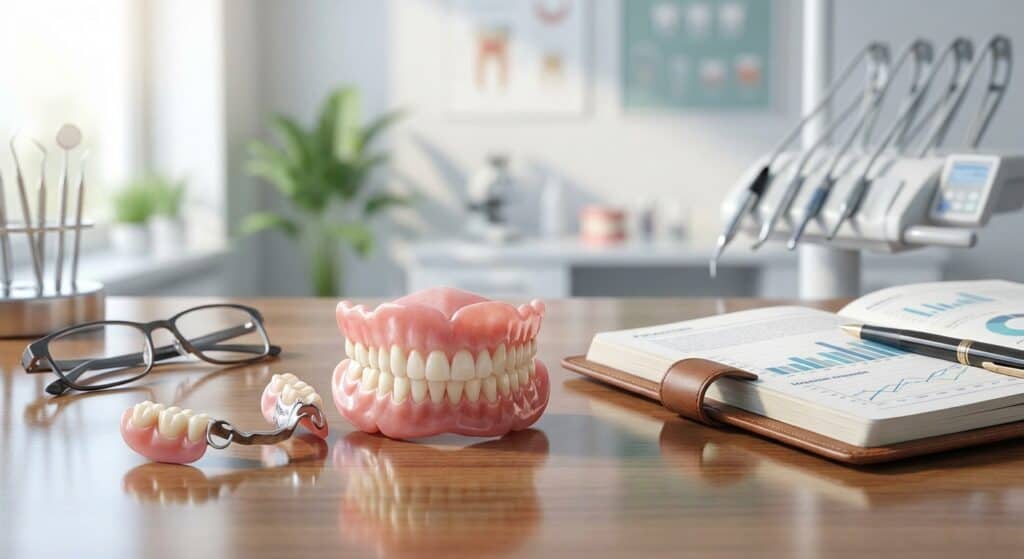

Overview
The denture cost Alberta varies significantly based on factors such as the type of denture, materials used, and required procedures, impacting the final investment for a restored smile.
Many options exist to make dentures accessible, from understanding different pricing tiers to exploring financial assistance programs. Knowing these options helps individuals plan for their dental health needs.
- Denture Costs: Review general expectations for denture costs in Alberta.
- Pricing Factors: Explore the elements affecting pricing for dentures.
- Denture Types: Discover the cost by type.
- Affordable Options: Learn about affordable denture solutions.
- Investing in Your Smile: Consider the value of dental investment.
- Confident Smile: Plan your path to a confident smile.
Denture Costs in Alberta
The denture cost Alberta patients face varies depending on the type of denture and individual needs. A full oral examination is generally required to determine the best treatment plan and associated expenses for your new smile, often performed by a qualified professional at Heritage Dental Centre for more.
You can expect a range of prices for different denture types, from basic options to more advanced solutions. Factors like materials and complexity influence the final price, which dental teams explain during your initial consultation. Learn more about dental implant options for stability and comfort.
| Denture Type | Average Cost Range (CAD) |
|---|---|
| Full Dentures (per arch) | $1,500 – $3,000 |
| Partial Dentures (per arch) | $1,200 – $2,500 |
| Implant-Supported Dentures | $5,000 – $30,000 (per arch) |
| Temporary Dentures | $600 – $1,500 |
Factors Affecting Denture Pricing
The total denture cost Alberta residents pay depends on several important factors. These range from the materials chosen for the prosthetic to the specific needs of each patient’s oral health. Understanding these elements helps individuals anticipate their investment.
The complexity of your case, including extractions or gum treatments, also influences the overall cost. Different providers may have varying fees, so comparing options can offer a clearer picture of the likely denture cost Alberta patients face. Consulting with dental professionals helps determine the specific requirements for your new smile.
| Factor | Description |
|---|---|
| Material Quality | The type of acrylic, resin, or metal used significantly impacts durability and appearance. Higher-grade materials generally increase the denture cost Alberta patients incur. |
| Denture Type | Full, partial, or implant-supported dentures each have different design and fabrication requirements. Each denture type comes with its own cost structure. |
| Additional Procedures | Pre-denture treatments such as tooth extractions, gum reshaping, or bone grafting add to the total expense. These procedures prepare your mouth for the best fit. |
| Customization & Aesthetics | Personalized shading, tooth molds, and gum contours enhance natural appearance. These custom features can affect the overall denture cost Alberta dental offices quote. |
| Clinic Location & Expertise | Geographic location within Alberta and the experience of the dental team influence pricing. Clinics with specialized equipment or highly experienced denturists may have different fee schedules. Our experienced dental team provides transparent pricing information. |
Types of Dentures and Cost
The overall denture cost Alberta residents pay varies greatly depending on the specific type of denture chosen. Each option offers different benefits in terms of aesthetics, function, and stability, which directly influence its price point. Your dental professional can help you choose the right type for your needs.
Here is a breakdown of common denture types and their typical cost ranges:
| Denture Type | Average Cost Range in Alberta |
|---|---|
| Full Dentures | $1,500 – $3,000 per arch |
| Partial Dentures | $1,200 – $2,500 per arch |
| Implant-Supported Dentures | $5,000 – $30,000 per arch |
| Immediate Dentures | Similar to full or partial, plus additional fitting appointments |
Traditional Full and Partial Dentures
Full dentures replace all teeth in an upper or lower arch, while partial dentures fill gaps left by a few missing teeth. The denture cost Alberta clinics charge for these conventional options is generally lower than implant-based solutions because they do not involve surgical procedures. Factors such as the materials used (e.g., acrylic, porcelain teeth) and the complexity of your mouth’s structure affect the final price.
Maintenance and occasional denture repair are part of owning traditional dentures, which can add to the long-term expenditure. Our dental team provides detailed information on what to expect for both initial costs and ongoing care for denture maintenance.
Implant-Supported Dentures
Implant-supported dentures attach to dental implants surgically placed in the jawbone. This option offers enhanced stability, improved chewing function, and a more natural feel compared to traditional dentures. The higher denture cost Alberta patients pay for these reflects the additional procedures involved, including implant surgery and specialized prosthetic design.
While the initial dental implant cost is higher, many patients consider the investment worthwhile due to the long-term benefits in comfort and oral health. This type of denture can significantly improve quality of life for individuals with extensive tooth loss.
Finding Affordable Denture Options
Exploring various avenues can help you manage denture costs in Alberta while ensuring quality care. Researching different clinics and understanding payment plans are key steps. Knowing your choices empowers you to make an informed decision about your oral health.
Compare Clinic Fees
Denture costs vary between providers. Contact several denture clinics to inquire about pricing for the specific type of dentures you need. Some clinics offer different tiers of materials and services.
Inquire About Payment Plans
Many dental practices offer flexible payment options to help spread the denture cost over time. Ask about monthly installments or financing solutions. Our team can help you with payment inquiries.
Check Dental Insurance Coverage
Review your dental insurance policy to understand what portion of denture costs it covers. Some plans provide partial coverage for restorative treatments. Learn more about dental insurance options.
Look for Special Programs
Some government programs or charitable organizations might offer assistance for dental care. Research local and provincial programs that could help with denture costs, especially for seniors or those with low incomes.
Consider Different Materials
The materials used in dentures significantly impact the price. While premium materials offer increased durability and aesthetics, more basic options can provide good function and comfort at a lower price point. Ask your denturist about different denture materials.
Selecting an affordable option does not mean sacrificing quality. Many reputable providers offer excellent dentures at various price points. Your denturist can help you find a solution that fits your needs and budget.
Investing in Your Smile
Considering the denture cost in Alberta means looking at more than just the initial price. It represents an investment in your oral health, overall comfort, and daily quality of life. Choosing the right dentures can bring back confidence in eating, speaking, and smiling, which directly impacts social interactions and self-esteem.
Patients often report significant improvements after receiving their dentures. This can range from better digestion due to proper chewing to a renewed sense of well-being. Our team works to ensure you feel supported through every step of the process, making sure your investment yields lasting benefits.
| Benefits of Dentures | Considerations for Dentures |
|---|---|
| Improved ability to chew and digest food properly. | Adjusting to new dentures takes time and practice. |
| Enhanced speech clarity for effective communication. | Regular cleaning and maintenance are necessary. |
| Restored facial aesthetics and a confident smile. | Periodic adjustments or relines may be needed. |
| Prevention of remaining teeth shifting after tooth loss. | Initial denture cost can vary based on type. |
| Support for facial muscles, preventing a sunken appearance. | Potential for minor discomfort during the adaptation period. |
Your Path to a Confident Smile
Restoring your smile with dentures is a worthy investment in your overall health and happiness. While denture cost Alberta varies based on type and materials, many options exist to fit different budgets. We encourage you to discuss your specific needs and financial considerations with a dental professional to find the best solution for you.
Quality dentures offer more than just aesthetic improvements; they allow you to eat, speak, and socialize with greater confidence. Do not let concerns about denture cost Alberta deter you from seeking solutions. Explore the possibilities for your smile by consulting with our team about denture options and payment plans. Our clinic offers personalized care, helping you achieve a healthier, more radiant smile. We aim to make the process straightforward, ensuring you feel comfortable every step of the way.
| Key Consideration | Description |
|---|---|
| Personalized Consultations | Discuss your oral health needs and budget with a dental professional. This step helps identify the most suitable denture type for you. |
| Payment Options | Explore various financing plans and insurance coverage to manage your denture cost Alberta. Many clinics offer flexible payment solutions. |
| Long-Term Value | Focus on the lasting benefits of dentures, including improved function and confidence. Investing in quality oral care provides enduring advantages. |