
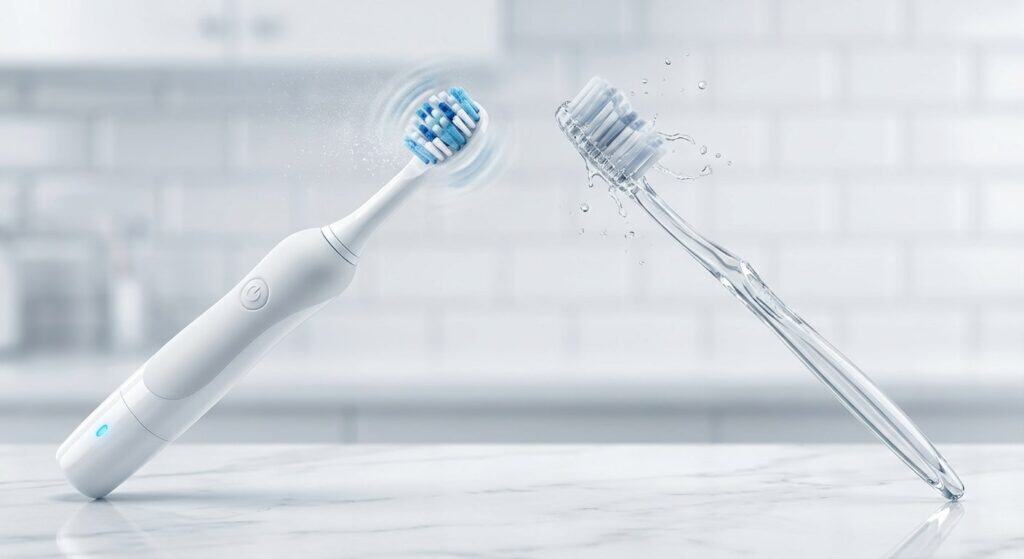

Making the correct choice for your oral care routine is crucial for preventing dental issues like cavities and gum disease. We will explore the core differences, plaque removal capabilities, technological advancements, ease of use, and cost considerations to provide a comprehensive overview of the electric vs. manual toothbrush comparison, and how each can impact your gum health.
Core Differences: Electric vs. Manual
When comparing electric vs. manual toothbrush effectiveness, plaque removal is a key factor. Electric toothbrushes, particularly those with oscillating-rotating or sonic technology, often demonstrate superior plaque removal capabilities compared to manual brushes, which can lead to better overall gum health and is a topic explored in detail regarding electric vs manual toothbrush and gum health for more.
Studies have indicated that the consistent motion of electric toothbrushes can more effectively dislodge plaque, reducing the risk of gingivitis and other gum-related issues. For individuals who struggle with proper manual brushing technique, an electric option can be a significant advantage in maintaining healthier gums.
- Plaque Removal: Electric toothbrushes often remove more plaque due to their powered movements, potentially reducing the risk of cavities.
- Gum Health: Consistent use of electric toothbrushes may contribute to reduced gingivitis and improved gum health.
- Technique Dependency: Manual toothbrushes rely heavily on user technique for effective plaque removal and gum health.
- Gentleness: Some electric toothbrushes feature pressure sensors to prevent brushing too hard, which can protect gums from recession.
Superior Plaque Removal Efficiency
Electric toothbrushes, with their high-speed oscillations and rotations, are designed to break up and sweep away plaque more efficiently than manual brushing alone. This power can be particularly beneficial for hard-to-reach areas of the mouth, ensuring a more thorough clean and helping to prevent issues like bad breath, which is related to stale mouth meaning.
Impact on Gum Recession
The debate between electric and manual toothbrushes often includes discussions about their respective impacts on gum health, and understanding these differences can help you choose the best tool for your needs; exploring resources on electric toothbrush vs. manual gum recession can provide valuable insights.
While aggressive brushing with either type can lead to gum recession, many modern electric toothbrushes are equipped with pressure sensors. These sensors alert users when they are applying too much force, thus helping to protect delicate gum tissue and minimize the risk of recession, a critical factor for long-term oral health.
For a deeper understanding of how different brushing methods can affect your gums, exploring resources on electric toothbrush vs. manual gum recession can provide valuable insights.
Reducing Gingivitis Risk
By more effectively removing plaque and food debris, electric toothbrushes can significantly reduce the bacteria that cause gingivitis. This leads to healthier gums, less inflammation, and a reduced likelihood of developing more serious periodontal conditions over time, especially when comparing electric versus manual toothbrush impacts on gum health.
Electric Toothbrush Technology
Electric toothbrushes boast a range of technological features designed to enhance the user’s brushing experience and effectiveness. These innovations go beyond simple power, aiming to guide users towards better oral hygiene practices. When selecting a toothbrush, consider consulting with your dentist; here is some advice on how to choose a dentist to ensure you receive the best care.
Key technological advancements include built-in timers that ensure users brush for the dentist-recommended two minutes, and pressure sensors that prevent over-brushing. Many models also offer multiple brushing modes tailored to different needs, such as sensitive teeth or deep cleaning.
- Built-in Timers: Most electric toothbrushes include a two-minute timer, often with quadrant pacing, to ensure adequate brushing time for all areas of the mouth.
- Pressure Sensors: These sensors alert you with a light or change in vibration if you are applying too much force, protecting your gums and enamel.
- Multiple Brushing Modes: Options like ‘sensitive,’ ‘whitening,’ ‘gum care,’ and ‘deep clean’ allow for a customized brushing experience based on individual needs.
- Connectivity: Some advanced models connect to smartphone apps, offering real-time feedback on brushing technique, coverage, and duration.
Ease of Use and Technique
The ease of use is a significant factor when choosing between an electric vs. manual toothbrush. For many, especially those with limited dexterity, an electric toothbrush simplifies the brushing process, requiring less manual effort to achieve a thorough clean. If you’re considering restorative options, understanding the differences between veneers and crowns can help you make an informed decision about your smile’s future.
Having worked with local families for years, we’ve seen how electric toothbrushes can simplify routines for those with dexterity challenges. The powered motion does much of the work, allowing individuals to focus on guiding the brush head over their teeth and gums, ensuring comprehensive coverage without complex manual manipulation. Understanding the benefits of electric toothbrushes can help make this decision easier, especially when considering potential issues like gum recession or the importance of dental x-ray safety for more.
Manual toothbrushes require a specific technique, involving careful angling and sweeping motions, to be truly effective. While this technique is teachable, it can be challenging for some to master consistently, making electric options a more accessible choice for achieving optimal oral hygiene.
Cost and Maintenance Considerations
When considering the electric vs. manual toothbrush debate, the cost and maintenance are important practical factors. Manual toothbrushes are significantly cheaper to purchase initially and require only periodic replacement of the entire brush, typically every three to four months.
Electric toothbrushes have a higher upfront cost, but their maintenance involves replacing only the brush head, which is generally less frequent than replacing a whole manual brush. The long-term cost-effectiveness can depend on the model and frequency of head replacement. For more on this, see our guide to electric vs manual toothbrush and gum health, and understand the roles of a dentist vs hygienist.
- Initial Purchase: Manual toothbrushes are inexpensive, while electric models represent a larger initial investment.
- Replacement Heads: For electric toothbrushes, replacement heads are necessary every 3-4 months and are more costly than a new manual toothbrush.
- Battery/Charging: Electric toothbrushes require batteries or charging, which is an ongoing consideration.
- Durability: Electric toothbrush handles are designed to last for several years, whereas manual brushes are disposable.
Ongoing Expenses of Electric Toothbrushes
The primary ongoing expense for electric toothbrushes is the replacement brush heads. These typically need to be changed every three to four months, similar to manual toothbrushes, to maintain optimal bristle effectiveness and hygiene. For more information on dental restorations, consider comparing veneers vs crowns.
Budget-Friendly Manual Toothbrushes
Manual toothbrushes remain the most budget-friendly option for daily oral care. Their low cost makes them accessible to everyone, and they require no special charging or battery replacements, making them a simple and economical choice, especially for those who might experience dental anxiety and prefer a straightforward approach to overcoming dental anxiety.
Long-Term Value of Electric Models
While the initial cost of an electric toothbrush can be substantial, many users find the long-term value outweighs the expense. The enhanced cleaning power, built-in features like timers and pressure sensors, and potential for improved oral health can make them a worthwhile investment for many, especially when considering options like a dental crown to restore your smile.
Professional Recommendations
Dental professionals generally agree that both electric and manual toothbrushes can be effective for maintaining oral hygiene, provided they are used correctly and consistently. However, many dentists lean towards recommending electric toothbrushes due to their inherent advantages in plaque removal and ease of use for a broad range of patients. For more information on how electric toothbrushes compare to manual ones regarding gum health, you can explore our guide on electric vs manual toothbrush and gum health.
The consistent and powerful cleaning action of electric toothbrushes, combined with features like timers and pressure sensors, often leads to better compliance and superior results, especially for those who may struggle with manual brushing technique. Consulting with your dentist is always the best way to get personalized advice on the most suitable toothbrush for your individual oral health needs.
For further insights into how different brushing methods impact oral health, exploring information on manual or electric toothbrushes can be very beneficial.
Choosing the Right Toothbrush
Selecting the ideal toothbrush, whether electric or manual, involves considering several personal factors to ensure it best meets your oral health needs and lifestyle. It’s not a one-size-fits-all decision, and what works best for one person might not be ideal for another.
Ultimately, the most effective toothbrush is the one you will use consistently and correctly. Understanding your own brushing habits, any specific dental concerns you have, and your personal preferences will guide you toward the right choice. Consulting with your dental professional can provide tailored recommendations based on your unique oral health profile, including insights into conditions like TMJ disorders and their causes.
- Seek Professional Advice: Discuss your options with your dentist or dental hygienist for personalized recommendations.
Conclusion: Your Best Smile Choice
In the electric vs. manual toothbrush comparison, both options have their merits. Manual toothbrushes offer simplicity and affordability, while electric toothbrushes provide advanced technology, enhanced cleaning power, and features that can promote better brushing habits.
The ultimate goal is to maintain excellent oral hygiene, and the best toothbrush is one that you will use effectively every day. Whether you choose the classic simplicity of a manual brush or the technological edge of an electric model, consistent and proper technique is key. For those concerned about gum health, understanding the impact of your brushing choice is important; learn more about electric vs manual toothbrush and gum health.
We encourage you to discuss your brushing habits and any concerns you may have with your dental professional at Heritage Dental Centre. They can offer personalized recommendations to help you achieve and maintain your healthiest, most radiant smile. For more detailed comparisons and advice, consider resources like electric toothbrush vs. manual gum recession. If you are interested in cosmetic improvements, you might also explore options such as https://heritagedentaledmonton.ca/what-are-dental-veneers/ for a smile makeover.
Frequently Asked Questions
Navigating the choices between electric and manual toothbrushes can bring up several questions. Here we address some common inquiries to help clarify the decision-making process for your oral care routine.
| Question | Answer |
|---|---|
| Can a manual toothbrush be as effective as an electric one? | Yes, a manual toothbrush can be just as effective as an electric one if used with proper technique, adequate time, and diligence in reaching all tooth surfaces. However, electric toothbrushes often make it easier to achieve a thorough clean due to their powered movements. |
| Are electric toothbrushes better for gum health? | Many electric toothbrushes are designed with features like pressure sensors and specialized modes that can be gentler on gums and more effective at removing plaque, potentially leading to better gum health. Studies often show electric toothbrushes performing better in reducing gingivitis, and you can learn more about electric vs manual toothbrush and gum health. |
| How often should I replace my toothbrush head? | Whether you use a manual or electric toothbrush, the general recommendation is to replace it or its head every three to four months, or sooner if the bristles become frayed or worn. |
| What is the main advantage of an electric toothbrush? | The main advantages of an electric toothbrush often include superior plaque removal, built-in timers for adequate brushing duration, pressure sensors to prevent over-brushing, and ease of use for individuals with limited dexterity. |
| Are electric toothbrushes worth the extra cost? | For many people, the enhanced cleaning performance, ease of use, and features like timers and pressure sensors make electric toothbrushes a worthwhile investment in their oral health. The long-term benefits can outweigh the higher initial cost. |