

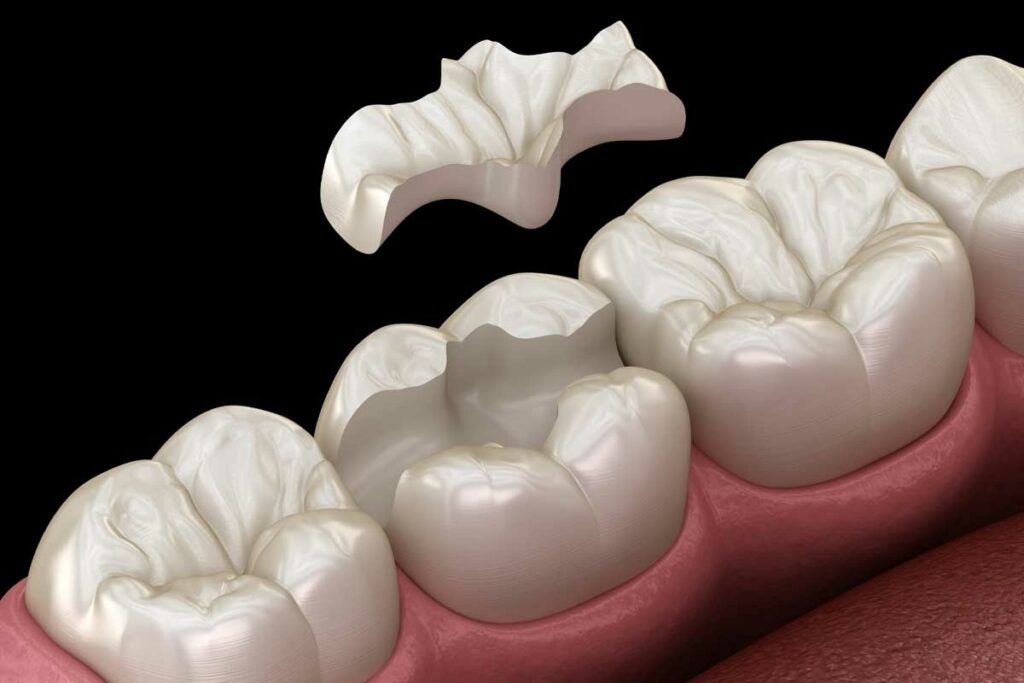
Try Tooth-Like Dental Inlays in Edmonton
Our smile is one of the most vibrant ways to communicate our feelings with one another. Though our teeth are very strong, they are still sensitive to damage. A chipped or fractured tooth can immensely affect your outward impression on the world in a big way. Your dentist at Heritage Dental Centre can examine the damaged tooth or teeth in order to determine the best treatment for you in Edmonton. Check out our restorative dentistry services.
Considerations for Inlays
The reasons for inlay restoration include:
- Broken or fractured teeth
- Decayed teeth
- Large fillings
- Cosmetic enhancement
- Fractured fillings
If good oral hygiene habits like frequent brushing and flossing are not maintained, your teeth could become affected with tooth decay. Other factors, such as an injury or trauma, can also damage your teeth. Minor decay, such as cavities, can generally be handled with a dental filling, whereas a crown is required for severe cases. However, in cases where the damage is somewhere between minor and severe cases, dental inlays could be the answer. An inlay repair is a custom made filling made of composite material, gold, or tooth-coloured porcelain. Though inlays are not permanent, they can last up to anywhere between 5-10 years.
How Is an Inlay Different From Crown and Filling?
If a tooth is severely damaged, a bonded filling may not be sufficient to restore it. Here, an inlay may be needed to restore the fractured tooth to complete health. Compared to bonded fillings, inlays handle a wider surface area. However, they don’t replace the whole tooth surface as dental crowns do. The bonded fillings can decrease the health of a natural tooth by half. But inlays can improve a tooth’s strength by up to 75 percent, as they are bonded directly onto the tooth

Understanding The Benefits And Drawbacks Of Dental Inlays
Benefits
- Durable, thanks to the tough, hard-wearing materials they are made from.
- Doesn’t contain any allergic material, therefore it can be safely used.
- Prolongs tooth life, and prevents the need for further dental treatment in the future.
- Natural-looking results: aesthetically perfect appearance.
- Gives a precise fitting, as it is made with the modern CAD-CAM technology that combines advanced computer software, a 3D scanner and a milling unit.
Drawbacks
- More expensive than crown and filling.
- Requires having some of the natural healthy teeth to be removed.
- A second appointment will be needed to bond them to your teeth, as the restorations are custom-made to each tooth by a dental lab.
Cost of Getting an Inlay Restoration
The cost of an inlay differs depending on quantity and complexity. The cost can range from $650 to $1,200, depending on surface. Discounts may be given for multiple teeth treated at once as we pass on the savings in time and materials to you. When you visit us for your consultation, we will provide a quote suggesting the specific costs.
Is the Procedure Painful?
Local anesthesia is provided to the patient for a pleasant and pain-free procedure. Residual pain after the procedure is done is comparatively rare and can be taken care of by taking over-the-counter medications.
What’s the Difference Between Inlays and Onlays?
An inlay is created to fit in between the cusps of a molar or premolar. It includes only a small region of the biting surface of the tooth. If the restoration covers one or more of the cusps, it’s called an onlay.
Will the Inlays Be Noticeable?
We will tint the porcelain so that it matches your natural tooth colour. Porcelain doesn’t fade as easily as your natural teeth. However, you will need to keep up with routine cleanings to ensure your teeth, and the inlay continues to match.
How Do You Care for Your Inlays?
The preferred way to maintain your inlays is to be careful with your oral hygiene – brush and floss twice a day and visit the dentist frequently.
What Will My Inlay Appointment Be Like?
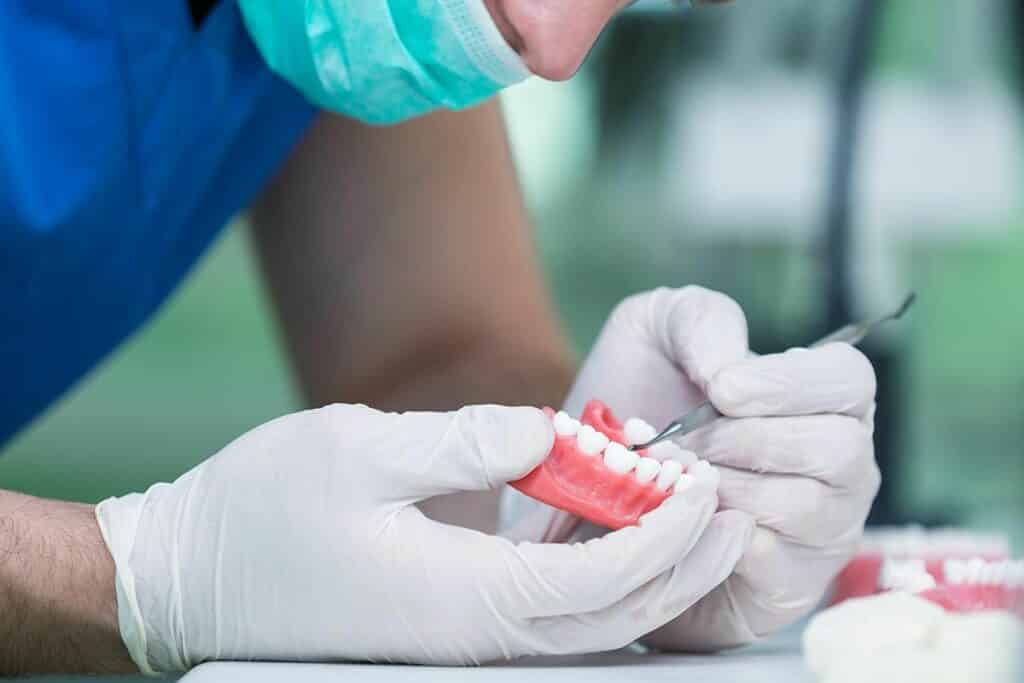
You will need two appointments to finish the procedure. At your first appointment, the tooth is prepared for the inlay. If required, your dentist will remove the decayed section of the tooth, then form a mould of the tooth. Using that mould, the custom restoration is created. A temporary filling is placed on the tooth until the restoration is ready. At your second appointment, the dentist will bond the restoration to your tooth.