

Overview
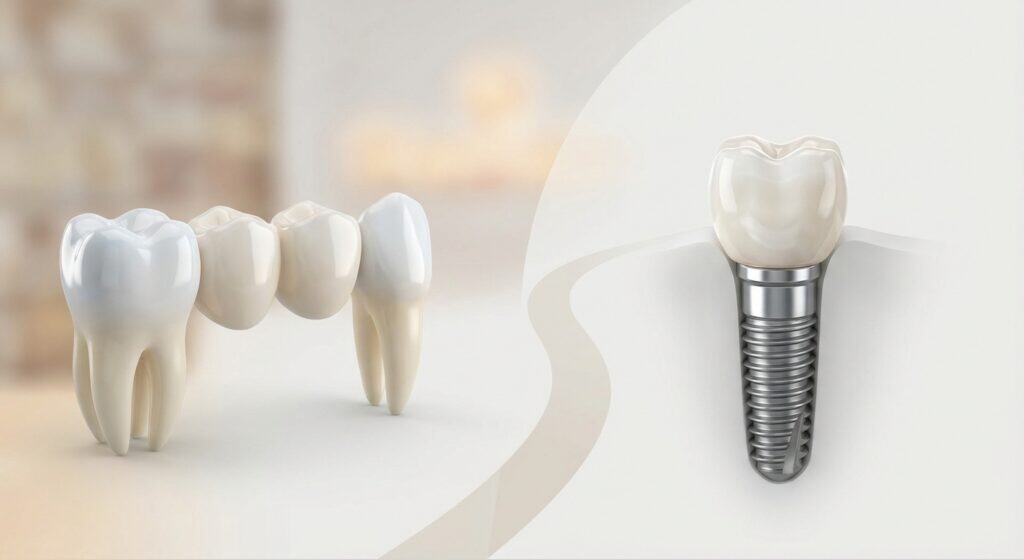
When considering dental bridges vs dental implants, both options replace missing teeth, but they do so in different ways. Bridges restore a smile by using adjacent teeth for support, while implants replace the tooth root itself, offering distinct benefits for long-term oral health.
Making an informed decision involves weighing several factors, from procedure type to how each option impacts your jawbone and surrounding teeth.
- Key Differences: Get an initial idea of the fundamental distinctions between these tooth replacement solutions.
- Dental Bridges: Learn about how bridges function and their common applications.
- Dental Implants: Explore what implants are and how they provide a stable foundation.
- Comparison Factors: Review important considerations such as durability and bone health impact.
- Decision Process: Discover guidance for selecting the best option for your needs.
- Consultation: Plan your path toward a healthier smile with professional advice.
Dental Bridges Vs Dental Implants: Key Differences
When considering tooth replacement options, dental bridges vs dental implants are two primary solutions, each offering distinct advantages. While both effectively restore missing teeth, their methods, longevity, and impact on oral health differ significantly.
Dental bridges rely on support from adjacent teeth, whereas dental implants involve a surgical procedure to place a post directly into the jawbone. Restorative dentistry services aim to bring back full function and appearance to your smile. The choice often depends on individual circumstances, oral health status, and long-term goals for your smile.
| Feature | Dental Bridges | Dental Implants |
|---|---|---|
| Support | Supported by adjacent natural teeth or existing implants. | Supported by a titanium post surgically placed into the jawbone. |
| Bone Health | Does not prevent bone loss in the missing tooth area. | Stimulates the jawbone, helping to preserve bone density. |
| Adjacent Teeth | Requires preparation (reshaping) of neighboring healthy teeth. | Does not affect adjacent healthy teeth. |
| Longevity | Typically lasts 5 to 15 years with proper care. | Can last a lifetime with good oral hygiene and regular dental check-ups. |
| Treatment Process | Less invasive, usually completed in a few appointments. | More invasive, involves surgery and a healing period for osseointegration. |
| Stability | Offers good stability but can feel less natural than an implant. | Offers superior stability, functioning much like a natural tooth root. |
What Are Dental Bridges?
A dental bridge offers a solution for replacing one or more missing teeth. This restorative device literally “bridges” the gap created by missing teeth, restoring both appearance and function. Bridges are a more traditional approach that has been used successfully for many years.
The structure of a dental bridge typically involves one or more artificial teeth, called pontics, held in place by dental crowns on the natural teeth on either side of the gap. These supporting teeth are called abutment teeth. Once placed, a bridge is a fixed appliance, meaning it cannot be removed by the patient.
Dental bridges can be an effective option for patients who prefer a non-surgical procedure or who may not be candidates for implants. Proper oral hygiene, including regular brushing and flossing, helps maintain the longevity of your bridge. For more information on general dental care, please contact our office.
Exploring Dental Implants
Dental implants provide a stable and long-lasting solution for tooth replacement. They involve surgically placing a titanium post into the jawbone, which acts as an artificial tooth root. This post fuses with the bone over time, creating a strong foundation for a replacement tooth for more.
This method offers benefits beyond just filling a gap. Implants help preserve jawbone health by providing the stimulation naturally offered by a tooth root. They also do not require alterations to adjacent healthy teeth, unlike dental bridges that require support from nearby structures.
The process for dental implants typically involves several stages, including initial consultation, implant placement surgery, a healing period, and finally, the attachment of the crown or prosthetic tooth. Each step ensures the implant integrates correctly and functions like a natural tooth. Learn more about our dental services for more.
Key Differences and Considerations
When choosing between dental bridges and dental implants, it’s important to understand their long-term effects, maintenance, and overall procedure. These two solutions differ significantly, and examining their distinctions helps align your choice with oral health goals.
Each method offers distinct advantages and disadvantages regarding durability, jawbone health, and interaction with surrounding teeth. This section breaks down these specific comparison points.
Durability and Longevity
Dental implants typically offer a longer-lasting solution. With proper care, implants can last a lifetime, as the titanium post fuses with the jawbone. This provides a stable and enduring foundation, often outperforming dental bridges in terms of longevity.
In contrast, dental bridges generally have a shorter lifespan, usually lasting between 5 to 15 years. Their longevity depends on factors like oral hygiene, the health of supporting teeth, and general wear and tear. Regular check-ups and maintenance, such as those provided by a general dentist, help extend the life of a bridge.
Impact on Jawbone Health and Adjacent Teeth
Dental implants preserve jawbone health by stimulating the bone, much like a natural tooth root. This stimulation helps prevent bone loss, which can occur after a tooth extraction. Bone loss can affect facial structure and the stability of adjacent teeth.
Conversely, dental bridges do not offer this jawbone stimulation. The bridge rests on the gum line, so it does not prevent bone resorption in the area where the tooth was lost. Additionally, placing a dental bridge requires modifying the adjacent healthy teeth. These teeth must be shaped to accommodate crowns, which can sometimes compromise their long-term health and structural integrity. For more details on maintaining oral health, consult our oral hygiene guide for more.
| Feature | Dental Bridges | Dental Implants |
|---|---|---|
| Durability | 5-15 years, depends on care | Often a lifetime with proper care |
| Jawbone Health | Does not prevent bone loss | Prevents bone loss, stimulates jawbone |
| Adjacent Teeth | Requires alteration of healthy adjacent teeth | Does not affect healthy adjacent teeth |
| Treatment Process | Non-surgical, quicker completion | Surgical procedure, longer treatment time |
| Maintenance | Requires special cleaning under the bridge | Maintained like natural teeth with brushing and flossing |
Making Your Choice
Deciding between dental bridges and dental implants requires careful thought, as both options restore your smile and oral function. Your dentist will assess your specific oral health conditions, such as bone density and the state of surrounding teeth. This personalized assessment forms the basis for recommending the most suitable treatment.
Your individual needs, oral health, and budget all play significant roles in this decision. Considering the long-term implications for your oral health is also beneficial. Our team at Heritage Dental Centre offers guidance to help you make an informed choice.
Key Considerations for Your Decision
- Consult with your dentist for a personalized assessment.
- Evaluate the health of your remaining teeth and gums.
- Consider your budget and long-term financial planning for dental care.
- Discuss your lifestyle and expectations for durability and maintenance.
Next Steps for Your Smile
Deciding between dental bridges vs dental implants requires careful thought and professional guidance. Both options offer effective ways to restore your smile and oral function. Your individual needs, overall health, and budget influence the best choice for you.
To make an informed decision, consulting with a dental professional is the optimal next step. They assess your oral health, discuss your goals, and recommend the most suitable treatment plan. You can explore financing options and learn about dental insurance coverage for these procedures during your consultation.
Take proactive steps towards a healthier, more confident smile. Schedule a consultation to discuss dental bridges vs dental implants and receive personalized advice. Book your appointment today to start your journey to a restored smile. Our dental services include a range of restorative treatments.