

Overview
When considering orthodontic treatment, comparing invisalign vs traditional braces a cost and benefit analysis helps many people decide on the best option. Both methods effectively straighten teeth and correct bite issues, but they differ significantly in appearance, comfort, and maintenance requirements. This guide explores those distinctions to help you make an informed choice.
Making a choice between these options involves weighing various aspects, from daily convenience to financial investment. Here are the main points this article addresses:
- Key Differences: Learn about the distinctions between clear aligners and metal brackets.
- Cost Comparison: See what to expect regarding treatment expenses for each method.
- Benefit Analysis: Examine the advantages in aesthetics and comfort.
- Treatment Duration: Discover typical timelines and effectiveness rates.
- Making Choices: Review factors to help select your treatment.
- Conclusion: Plan your path to a straighter smile.
Invisalign vs. Traditional Braces: Key Differences
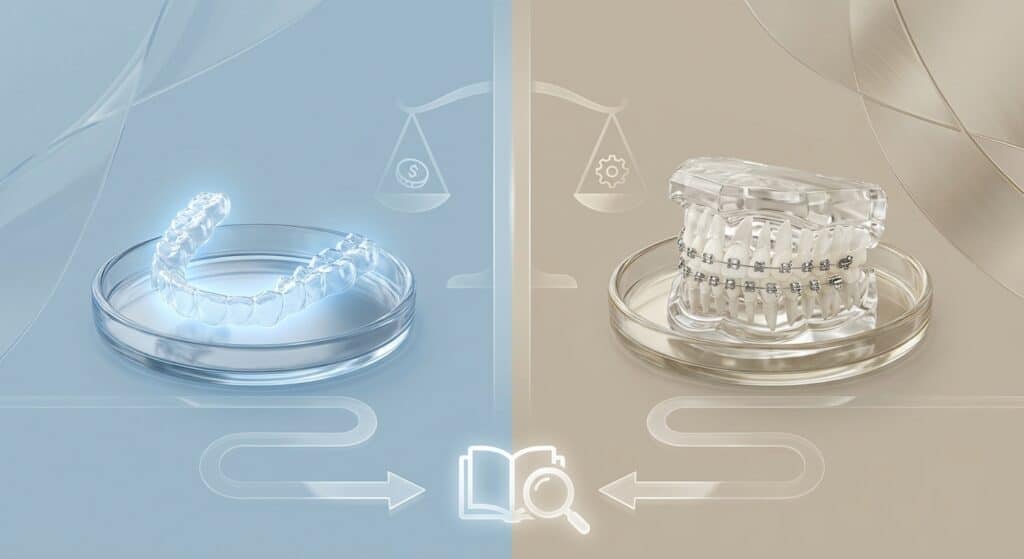
For individuals considering orthodontic treatment, an invisalign vs traditional braces a cost and benefit analysis provides clarity on distinct features. Invisalign uses a series of clear, removable aligners that gradually shift teeth into position. In contrast, traditional braces employ metal brackets affixed to teeth, connected by wires and small elastic bands to exert continuous force.
These methods differ significantly in appearance, how they feel, and their practical function. Traditional braces are visible and permanently attached for the duration of treatment, while Invisalign aligners are nearly invisible and can be removed for eating and oral hygiene. This impacts daily activities like eating and cleaning teeth, offering different experiences for patients seeking straightening options for more.
| Feature | Invisalign | Traditional Braces |
|---|---|---|
| Appearance | Clear, virtually invisible aligners | Visible metal brackets and wires |
| Removability | Removable for eating, drinking, brushing, and flossing | Fixed to teeth for the entire treatment period |
| Comfort | Smooth plastic, generally less irritation; initial discomfort possible | Metal brackets and wires can cause irritation to cheeks and gums; adjustments may lead to soreness |
| Oral Hygiene | Easier to maintain oral hygiene since aligners are removed | Requires more diligent cleaning around brackets and wires |
| Diet Restrictions | None, as aligners are removed before meals | Restrictions on hard, sticky, or chewy foods to avoid damage |
| Treatment Visits | Fewer, typically every 6-8 weeks for new aligners and progress checks | More frequent, typically every 4-6 weeks for adjustments |
Cost Comparison: What to Expect
When considering orthodontic treatment, the financial commitment for invisalign vs traditional braces a cost and benefit analysis often plays a significant role. Costs vary widely depending on individual needs, treatment duration, and geographic location. Generally, the price range for both options can be similar, though specific factors influence the final amount.
Many factors impact the total expense, including the complexity of your case, the orthodontist’s fees, and whether you require additional procedures like tooth extractions or retainers for more. It is advisable to discuss all potential costs upfront with your dental provider. Some clinics offer flexible payment plans to help manage the investment.
| Feature | Invisalign | Traditional Braces |
|---|---|---|
| Average Cost Range | $3,000 – $8,000 CAD | $3,000 – $7,500 CAD |
| Consultation Fee | Often included in treatment or separate; varies | Often included in treatment or separate; varies |
| Follow-up Appointments | Fewer, typically every 6-8 weeks | More frequent, typically every 4-6 weeks |
| Maintenance Costs | Replacement aligners if lost or damaged | Repair of broken brackets or wires |
| Retainers After Treatment | Usually included or a separate fee | Usually included or a separate fee |
| Insurance Coverage | Often similar to traditional braces, check policy details | Often covered by orthodontic benefits, check policy details |
Benefit Analysis: Aesthetics and Comfort
When considering orthodontic treatment, the aesthetic appeal and comfort during the process often weigh heavily in the decision. An invisalign vs traditional braces a cost and benefit analysis shows distinct advantages for each. Both methods aim to straighten teeth and improve oral health, but they approach these goals with different experiences for the patient.
Appearance During Treatment
- Invisalign: These clear aligners are nearly invisible, making them a popular choice for adults and teenagers concerned about their appearance during orthodontic treatment. Their discreet nature means many people may not even notice you are wearing them, offering a significant aesthetic benefit.
- Traditional Braces: Metal brackets and wires are visible, which some patients find less appealing. However, modern braces are smaller and less noticeable than in the past, and options like ceramic braces provide a less conspicuous alternative. Discussing these options with a dentist can help patients choose the best fit for their aesthetic preferences. compare clear aligners and metal braces
Comfort and Daily Life Impact
- Invisalign: The smooth plastic aligners generally cause less irritation to the cheeks and gums compared to metal brackets. They are also removable, which simplifies eating and oral hygiene. Patients can take out their aligners for meals, brushing, and flossing, allowing for an unrestricted diet and easier cleaning. This removability also means fewer emergency visits for broken wires or brackets.
- Traditional Braces: Patients may experience initial discomfort or soreness as their teeth adjust to the pressure. Brackets and wires can sometimes cause minor irritation or sores inside the mouth, though wax can be applied for relief. Maintaining oral hygiene requires more effort due to food particles getting caught in the braces, and certain foods must be avoided to prevent damage. Our team can provide guidance on Invisalign care and braces maintenance.
Treatment Duration and Effectiveness
When considering invisalign vs traditional braces a cost and benefit analysis, treatment duration and effectiveness are major points. Traditional braces typically involve an active treatment period ranging from 18 to 36 months. This timeline can vary depending on the severity of the case and patient compliance. After this, a retention phase with retainers is necessary to maintain the new alignment. Orthodontic services aim to address a range of dental alignment concerns.
Invisalign treatment often has a slightly shorter average duration, usually between 12 and 18 months for adults. However, complex cases may extend beyond this period. The effectiveness of both methods depends heavily on consistent wear and proper care. Your dental health consultation will help determine the best path forward.
Steps for Both Treatments
- Initial Consultation: A dental professional evaluates your teeth and discusses treatment goals.
- Treatment Planning: Digital scans or impressions are taken to create a personalized plan.
- Active Treatment Phase: This involves wearing either braces or aligners to gradually shift teeth.
- Regular Adjustments/Check-ups: Periodic visits monitor progress and make necessary adjustments.
- Retention Phase: After active treatment, retainers keep teeth in their new positions.
Making Your Choice: Factors to Consider
Deciding between clear aligners and traditional metal braces requires a careful assessment of several personal and practical factors. Your lifestyle, oral health needs, and budget all play significant roles in determining the best orthodontic path for you. Consider how each option fits into your daily routine.
When weighing invisalign vs traditional braces a cost and benefit analysis, discuss these aspects with your orthodontist. Their professional guidance can help align your expectations with the most suitable treatment. For instance, some complex cases may respond better to the consistent force of braces, while others benefit from the flexibility of aligners. Talking to a dental professional helps you make an informed choice.
- Aesthetics. Do you prefer a nearly invisible treatment option or are traditional brackets acceptable?
- Dietary Habits. Are you willing to remove aligners before eating and drinking, or do you prefer fixed appliances?
- Oral Hygiene. How important is the ability to brush and floss without obstructions? Aligners allow for easier cleaning.
- Discipline. Can you commit to wearing aligners for 20-22 hours a day, or would a non-removable option be better?
- Severity of Misalignment. Your orthodontist will assess the complexity of your case to recommend the most effective treatment type. Different orthodontic services cater to varying degrees of correction.
- Budget Considerations. Review the financial implications of each treatment with your dental office, including payment plans and insurance coverage. Explore available payment options to find what works for you.
Conclusion: Your Path to a Straighter Smile
Deciding between clear aligners and traditional braces involves weighing many considerations, from appearance preferences to treatment needs and budget. Each option offers distinct benefits and suitability for different orthodontic situations. This invisalign vs traditional braces a cost and benefit analysis shows that both paths lead to a healthier, more confident smile.
We invite you to schedule a consultation with our experienced team. We provide personalized recommendations to help you achieve your desired results. You can also explore more about our general dentistry services to maintain optimal oral health.