

Overview
Many people wonder whether an electric vs manual toothbrush gum health impact differs. Both electric and manual toothbrushes can effectively clean teeth and maintain gum health when used correctly, but electric toothbrushes often provide an advantage in plaque removal and ease of use, especially for those with specific needs.
Choosing the right toothbrush involves considering various factors beyond just effectiveness. Personal preference, technique, and dental concerns all play a role in finding the best fit for your oral hygiene routine.
- Gum Health Focus: This article compares the two types of brushes, focusing on their impact on gum health outcomes.
- Electric Brush Impact: Discover how electric toothbrushes work and their specific benefits for gum tissue.
- Manual Brush Care: Explore the proper techniques for using manual toothbrushes to care for your gums.
- Best Toothbrush Choice: Get guidance on selecting a toothbrush that suits your individual gum needs.
- When to See a Dentist: Recognize the signs that indicate it’s time to consult a dental professional about gum concerns.
- Final Summary: Review a concise overview of toothbrush options and their roles in gum health.
Electric vs. Manual Toothbrushes: Gum Health Focus
When considering electric vs. manual toothbrush gum health, both options can maintain oral cleanliness, but their effectiveness differs. Electric toothbrushes generally offer advantages in plaque removal and gingivitis reduction, which directly impacts gum well-being. Good gum care starts with consistent and correct brushing habits, regardless of the brush type.

The choice between an electric or manual toothbrush for your gums often depends on individual technique, preference, and specific oral health needs. For instance, some people find the built-in timers and guided movements of electric brushes helpful for ensuring adequate cleaning time, as discussed by our dental hygiene team. Proper brushing technique prevents gum irritation and helps avoid issues like gum recession. Regular dental check-ups, including comprehensive dental exams, can help determine the best approach for your gums.
How Electric Toothbrushes Affect Gums
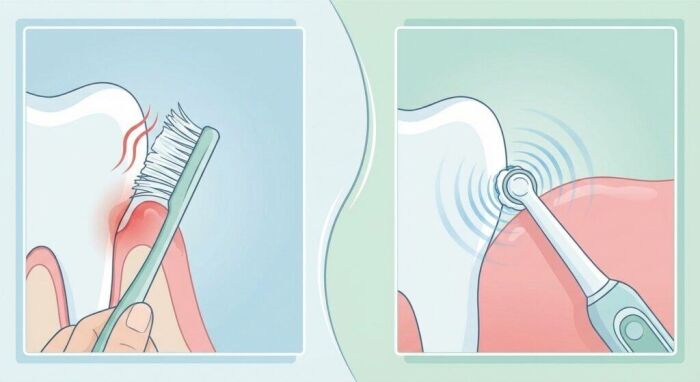
Electric toothbrushes offer specific advantages for gum health, often removing more plaque and reducing gingivitis compared to manual brushing. Their oscillating, rotating, or vibrating motions help clean tooth surfaces and along the gumline effectively. This efficiency can help prevent plaque buildup that irritates gums, leading to inflammation or bleeding, which are early signs of gum disease. For details on how to maintain gum health, consider reviewing gum disease prevention for more.
The consistent motion of an electric toothbrush can also help users brush for the recommended two minutes, thanks to built-in timers. Some models include pressure sensors that alert you if you are brushing too hard, protecting delicate gum tissue from recession caused by aggressive brushing. The debate between electric vs manual toothbrush gum impact often highlights these protective features. Our team can offer personal advice during your next visit.
While generally beneficial, improper technique with an electric brush, such as applying too much pressure or using worn-out brush heads, can still harm gums. Regular replacement of brush heads is important, typically every three months or sooner if bristles appear frayed. For optimal results, ensure you follow manufacturer guidelines and dental professional recommendations.
Manual Toothbrushes and Gum Care
Manual toothbrushes are a practical choice for gum health, but effective brushing relies on proper technique. Using the right method and an appropriate brush can prevent gum recession and other issues. Regular dental hygiene helps ensure healthy gums.
For manual toothbrush gum care, soft-bristled brushes are recommended to avoid gum tissue damage. Brush gently in small circular motions along the gumline to remove plaque without irritation. This approach is crucial for maintaining gum health.
| Advantages for Gums | Considerations |
|---|---|
| Accessible and Affordable | Technique Dependent |
| Control Over Pressure | Time Commitment |
| Travel-Friendly | Potential for Over-Brushing |
| Variety of Head Shapes | No Built-in Timer |
Choosing Your Best Toothbrush for Gums
Selecting between an electric vs manual toothbrush depends on individual needs and oral health goals. While both can clean teeth effectively, their features and impact on gum tissue differ. Consider your brushing habits, dexterity, and specific concerns, such as gum recession or sensitivity, when making your choice.
Many individuals find the consistency of an electric toothbrush beneficial for maintaining gum health. For those who prefer a simpler approach, a manual toothbrush offers effective cleaning with proper technique. Regular dental check-ups can also help you decide which brush type suits you best. Schedule a dental exam with our team to discuss your options.
Key Differences: Electric vs. Manual Toothbrushes
| Feature/Aspect | Electric Toothbrush | Manual Toothbrush |
|---|---|---|
| Plaque Effectiveness | Often removes more plaque due to high-speed vibrations. | Effective with proper technique; relies entirely on user’s skill. |
| Gum Health Impact | Can reduce gingivitis; pressure sensors prevent over-brushing. | Risk of gum abrasion if brushed too hard or with incorrect technique. |
| Ease of Use | Automated movements make it easier to clean. | Requires more dexterity and a specific brushing technique. |
| Cost | Higher initial cost and replacement brush heads. | Lower initial cost and inexpensive replacement brushes. |
| Special Features | Various modes for sensitivity, whitening, and gum massage. | Limited to brush head design (e.g., soft bristles). |
When to Seek Dental Advice for Gums
While daily hygiene is crucial, some gum issues require professional dental attention. Recognizing early signs can prevent more serious conditions. Regular dental check-ups allow for early detection and intervention for gum health concerns.
Ignoring symptoms can worsen gum disease, leading to discomfort and expensive treatments. Dental professionals offer specialized cleaning, treatments, and advice. If you experience any of the following signs, schedule an appointment with your dentist promptly.
- Bleeding Gums: Gums that bleed during or after brushing or flossing are often an early sign of gingivitis, an inflammation of the gums. Treatment for gum disease can address this.
- Red or Swollen Gums: Gums appearing red, swollen, or puffy, especially around the base of the teeth, indicate inflammation or infection.
- Persistent Bad Breath: While many factors cause bad breath, persistent halitosis can signal gum disease due to bacteria accumulating below the gumline.
- Receding Gums: If your gums appear to be pulling away from your teeth, making your teeth look longer, this indicates gum recession. This can expose tooth roots, leading to sensitivity and increasing the risk of decay. Learn more about gum recession treatments for more.
- Loose or Shifting Teeth: Gum disease can weaken the bone and tissues that hold teeth in place, causing them to become loose or change position.
- Pus Between Teeth and Gums: The presence of pus is a clear indicator of infection and requires immediate professional evaluation.
- Changes in Bite: If your teeth no longer fit together comfortably when you bite, or if your partial dentures no longer fit, it could be a sign of gum problems affecting tooth alignment.
- Increased Sensitivity: Exposed tooth roots due to receding gums can cause increased sensitivity to hot or cold temperatures. For other causes of discomfort, explore our tooth sensitivity guide for more.
Summary: Toothbrush Choice & Gum Health
Both electric and manual toothbrushes can effectively clean teeth and gums when used correctly. The primary difference often lies in ease of use and consistent cleaning power. Consider your personal brushing habits and any specific dental concerns when making your selection.
Electric toothbrushes offer oscillating or sonic movements, removing plaque with less effort. Many models include timers and pressure sensors, preventing over-brushing and gum irritation. They are particularly helpful for individuals with limited dexterity.
Manual toothbrushes are effective and affordable, but demand more conscious effort for adequate cleaning. Proper technique is key to preventing gum recession or other issues. Regardless of your choice, regular dental check-ups and consistent flossing are important for overall oral well-being. Schedule your next dental exam to discuss your oral care with a professional.
| Feature | Electric Toothbrush | Manual Toothbrush |
|---|---|---|
| Plaque Removal | Often more efficient due to automated motions. | Effective with correct technique, relies on user skill. |
| Gum Protection | Many models have pressure sensors to prevent damage. | Requires careful technique to avoid applying too much force. |
| Ease of Use | Simpler for consistent cleaning, especially for those with dexterity issues. | Requires more effort and precise technique for optimal results. |
| Cost | Higher initial cost and replacement heads. | Lower initial cost, widely available. |
| Timers | Often includes built-in timers for recommended brushing duration. | User must manually time brushing sessions. |
