
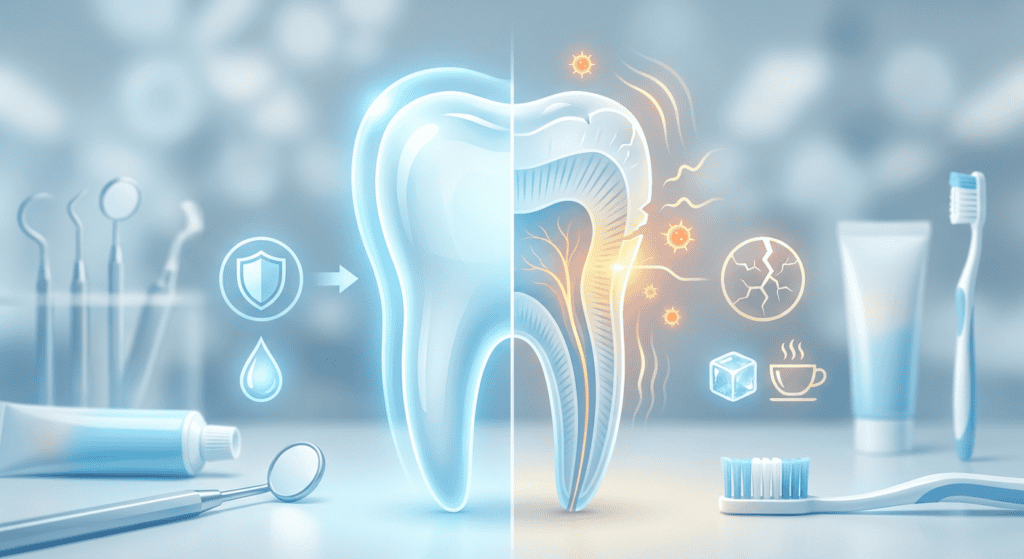

Overview
Tooth sensitivity, characterized by a sharp pain in the teeth, often results from exposed dentin. This common dental concern can make eating and drinking uncomfortable, especially with hot, cold, or sweet stimuli.
Understanding the reasons behind this discomfort helps in finding effective ways to stop the pain and protect your teeth.
- Causes: Discover the reasons behind tooth discomfort and how various factors contribute to it.
- Triggers: Learn about common everyday triggers that can worsen sensitivity.
- Relief: Explore effective strategies for relief from sensitive teeth.
- Prevention: Get practical tips for preventing future sensitivity and maintaining oral health.
- When to Seek Help: Find out when it’s best to consult a dentist for your tooth concerns.
- Long-Term Care: Plan for ongoing management of sensitivity for lasting comfort.
What Causes Tooth Sensitivity?
Tooth sensitivity, characterized by a sharp pain, occurs when the protective layers of a tooth wear away, exposing the inner dentin. This dentin contains thousands of microscopic tubules that lead to the tooth’s nerve. When exposed, these tubules allow external stimuli like cold air or hot food to reach the nerve, causing discomfort.
Many factors contribute to exposed dentin. Recognizing these common reasons helps in finding appropriate solutions for your sensitive teeth. Our team can help determine the exact cause during a dental examination for more.
| Cause | Explanation |
|---|---|
| Enamel Erosion | The hard, outer layer of your teeth, enamel, can wear down due to acidic foods, aggressive brushing, or teeth grinding. When enamel thins, dentin becomes exposed. Dental crowns can help protect weakened teeth. |
| Gum Recession | When gums pull back from the teeth, they expose the root surfaces, which are not covered by enamel. These exposed roots contain dentin, making them highly susceptible to sensitivity. |
| Cavities | Untreated tooth decay creates holes in the enamel, exposing the dentin and sometimes even the pulp. This leads to significant sensitivity and pain. Regular dental fillings can address these issues. |
| Teeth Grinding (Bruxism) | Clenching or grinding your teeth, often unknowingly during sleep, can wear down enamel and crack teeth. This leads to increased sensitivity. Night guards can protect against bruxism. |
| Cracked or Chipped Teeth | Breaks in the tooth surface can expose the dentin or even the nerve. This causes acute sensitivity when chewing or exposed to temperature changes. |
| Recent Dental Procedures | Temporary sensitivity can occur after dental work such as fillings, crowns, or teeth whitening. This type of sensitivity usually subsides within a few days or weeks. |
Common Triggers for Tooth Sensitivity
Tooth sensitivity can arise from various everyday factors that expose the delicate inner layers of your teeth. These common triggers often cause discomfort or sharp pain. Pinpointing what makes your teeth react helps address tooth sensitivity effectively.
Food and Drink Sensitivities
Certain foods and drinks frequently cause sensitive teeth to react. The temperature or acidity of what you consume plays a big part in these reactions. Avoiding these items can offer immediate relief.
| Trigger Category | Description of Effect |
|---|---|
| Hot Foods and Drinks | Coffee, tea, and hot soups can cause sharp pain if dentin is exposed. Regular dental check-ups help monitor tooth health. |
| Cold Foods and Drinks | Ice cream, cold beverages, and even cold air can trigger pain in sensitive teeth. |
| Acidic Foods | Citrus fruits, tomatoes, and sodas can erode enamel over time, leading to more exposure. Learn more healthy smile tips to protect your enamel. |
| Sugary Foods | Sweets can provoke a painful response due to their osmotic effect on the exposed dentin tubules. |
Brushing Habits and Dental Issues
How you brush your teeth and existing dental problems also contribute to tooth sensitivity. Improper brushing can wear down enamel, while other conditions might expose the tooth’s sensitive areas. Good oral hygiene tips are important for prevention.
- Aggressive Brushing: Brushing too hard or using a hard-bristled toothbrush can wear away enamel and expose the dentin.
- Teeth Grinding (Bruxism): Clenching or grinding teeth can wear down enamel, making teeth sensitive to temperature changes.
- Gum Recession: Gums pulling away from the teeth expose the root surfaces, which have no enamel protection. Proper gum health care can help.
- Cracked or Chipped Teeth: Cracks can expose the inner pulp of the tooth to external stimuli, causing pain.
- Recent Dental Procedures: Fillings, crowns, or bleaching can temporarily increase tooth sensitivity. This usually subsides as teeth recover.
Finding Relief for Tooth Sensitivity
Addressing tooth sensitivity requires a targeted approach, combining at-home care with professional dental treatments. Many options can help lessen discomfort and stop tooth pain, making daily activities like eating and drinking more comfortable. Finding the right solution for tooth sensitivity often depends on the underlying cause and severity.
From specialized toothpastes to dental procedures, various methods offer relief. Exploring these options with a dental professional can help you choose the most effective path forward for your specific needs. You can explore general dental services that might assist with your oral health.
| Method | Pros |
|---|---|
| Desensitizing Toothpaste | Contains ingredients like potassium nitrate or strontium chloride to block pain signals. Easy to use daily. |
| Fluoride Treatments | Professional fluoride applications strengthen enamel and reduce sensitivity. Can be applied quickly during a dental visit. |
| Bonding, Crowns, or Inlays | For severe sensitivity caused by exposed roots or worn enamel, these restorative options cover sensitive areas. They offer durable, long-term protection. |
| Gum Grafts | When gum recession exposes tooth roots, a gum graft can cover the exposed area, reducing sensitivity. This provides a natural-looking solution. |
| Lifestyle Adjustments | Avoiding acidic foods and drinks, practicing gentle brushing, and using a soft-bristled toothbrush can significantly lessen sensitivity. These are simple changes with a big impact. Learn more about effective dental care tips for more. |
Preventing Future Tooth Sensitivity
Preventing future tooth sensitivity involves consistent oral care and making thoughtful dietary choices. By adopting certain habits and seeking regular professional dental attention, you can significantly reduce the likelihood of discomfort from tooth sensitivity.
Daily Habits for Less Tooth Sensitivity
- Brush gently with a soft-bristled toothbrush. Aggressive brushing can wear away enamel and expose the dentin, leading to sensitivity. Use small, circular motions and apply minimal pressure to clean your teeth effectively.
- Use desensitizing toothpaste regularly. These toothpastes contain compounds that help block the tiny tubules in dentin, reducing the signals sent to the tooth’s nerve. Consistent use is key to achieving and maintaining relief.
- Avoid highly acidic foods and drinks. Acidic items like citrus fruits, sodas, and sports drinks can erode tooth enamel, increasing the risk of tooth sensitivity. Rinse your mouth with water after consuming acidic items to help neutralize acids.
- Address teeth grinding or clenching. Grinding can wear down enamel and cause micro-fractures, both contributing to sensitive teeth. If you suspect you grind your teeth, talk to your dentist about solutions like a night guard.
Professional Care for Prevention
- Maintain regular dental check-ups and cleanings. Your dentist can identify early signs of enamel wear, gum recession, or other issues that might cause tooth sensitivity. Professional cleanings also remove plaque and tartar, which can contribute to dental problems.
- Consider fluoride treatments. Professional fluoride applications at your dentist’s office can help strengthen enamel and make teeth more resistant to sensitivity. Your dentist can recommend if this treatment is right for you.
- Discuss protective sealants or bonding. For areas with significant enamel loss or exposed roots, your dentist might suggest dental bonding or sealants to cover sensitive spots and provide a protective barrier. This can offer long-lasting relief from tooth sensitivity.
- Ask about gum graft procedures for severe recession. If gum recession is a primary cause of your tooth sensitivity, a gum graft can cover exposed root surfaces, protecting them from stimuli and reducing discomfort.
When to See a Dentist for Tooth Sensitivity
While occasional tooth sensitivity can often be managed with at-home remedies, certain symptoms indicate it’s time to seek professional dental advice. Ignoring persistent or severe sensitivity may allow underlying issues to worsen. For lasting relief, contact a dental professional if you experience severe tooth sensitivity.
Pay close attention to how long the pain lasts and what triggers it. This information assists your dentist in accurately diagnosing the cause and recommending the correct dental care for more.
Signs You Should Consult a Dentist
- Persistent Pain: Sensitivity that does not improve after a few days of using desensitizing products or avoiding triggers.
- Sharp, Sudden Pain: Intense, unexpected pain when biting down or chewing, which could signal a crack or cavity.
- Pain After Dental Work: Sensitivity that lingers for more than a few weeks after a filling, crown, or other dental procedure.
- Visible Damage: You notice chipped teeth, gum recession, or dark spots on your teeth.
- Pain with Swelling: Any accompanying swelling around the affected tooth or jaw should prompt an immediate visit to our emergency dentist for more.
Managing Tooth Sensitivity Long-Term
Ongoing care helps keep tooth sensitivity at bay. Consistent attention to oral hygiene and professional dental check-ups make a big difference in preventing discomfort from returning. Our team at Heritage Dental Centre can guide you on the best practices for your specific needs, helping you maintain a healthy and comfortable smile.
We have seen that consistent use of sensitivity toothpaste can significantly reduce discomfort for many patients. Combining this with a gentle brushing technique and avoiding overly acidic foods helps manage tooth sensitivity effectively. Proper brushing techniques are fundamental to protecting enamel and gums, which in turn reduces sensitivity.
| Strategy for Long-Term Relief | Benefit |
|---|---|
| Regular dental hygiene appointments | Professional cleaning removes plaque and tartar, which contribute to gum recession and exposure of sensitive tooth roots. These cleanings also allow for early detection of issues. |
| Use desensitizing toothpaste daily | These toothpastes contain ingredients that block microscopic tubules in the dentin, reducing pain signals to the nerves. Consistent use strengthens this protective barrier over time. |
| Dietary adjustments | Limiting highly acidic or sugary foods and drinks can protect tooth enamel from erosion, which is a common cause of tooth sensitivity. Rinsing with water after consuming acidic items can also help. |
| Address teeth grinding (bruxism) | Grinding or clenching teeth wears down enamel, leading to increased sensitivity. Custom night guards or other dental interventions can protect teeth from this habit. |