

Overview
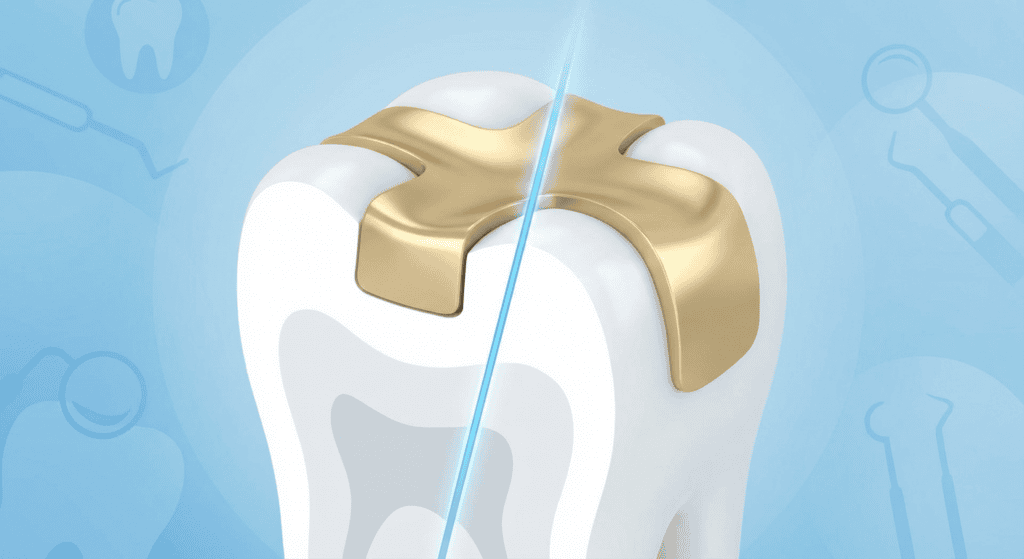
Dental inlays and onlays are restorative solutions designed to repair teeth with decay or damage that is too extensive for a simple filling but not severe enough to require a full crown.
These indirect restorations offer a durable and aesthetically pleasing alternative, custom-made in a dental laboratory before being bonded to your tooth. They help restore the tooth’s original shape, strength, and function.
- Restorative Solutions: Learn about inlays and onlays and their general purpose in dentistry.
- Inlay Functions: Find out how dental inlays address moderate tooth damage.
- Onlay Applications: Discover the uses of dental onlays for more extensive tooth repair.
- Selection Guidance: Determine when to choose between these two options.
- Informed Decisions: Get advice for making the right choice for your dental health.
- Future Care: Plan your next steps for maintaining a healthy smile.
Dental Inlays and Onlays: What You Need to Know
Dental inlays and onlays are restorative treatments for teeth with decay or damage too extensive for a filling but not severe enough for a full crown. These custom-made restorations strengthen the tooth, restore its shape, and improve its function. They offer a lasting solution for preserving natural tooth material and preventing further issues. Our dental services focus on solutions that protect your oral health for years to come.
Unlike traditional fillings, inlays and onlays are fabricated in a dental lab from a mold of your tooth. They are then precisely bonded into place during a second appointment. This process ensures a more exact fit and a stronger, more durable repair for damaged teeth. Restorative dentistry aims to bring back the full function and appearance of your smile.
Exploring Dental Inlays
Dental inlays are custom-made fillings that repair tooth damage confined within the cusps, the pointed parts of your chewing surface. They offer a more durable and aesthetic solution than traditional fillings for specific types of cavities or damage. Our dental services focus on preserving as much natural tooth structure as possible.
Dentists craft inlays from materials like porcelain, composite resin, or gold. Porcelain and composite resin are popular choices for their ability to match tooth color, providing a natural look. Gold inlays are known for their strength and longevity, though less common today for aesthetic reasons. The process involves removing the damaged part of the tooth, taking an impression, and then bonding the custom-made inlay into place.
| Benefit Category | Description |
|---|---|
| Durability | Dental inlays offer superior strength and can last many years longer than conventional fillings, reducing the need for frequent replacements. |
| Protection | By fitting precisely within the tooth cusps, inlays strengthen the tooth structure and prevent further decay or fracture. |
| Aesthetics | When made from porcelain or composite resin, inlays blend with the natural tooth color, making them virtually invisible. |
| Fit and Function | Custom fabrication ensures a precise fit, which helps prevent food trapping and reduces the risk of secondary decay. |
Discovering Dental Onlays
Dental onlays address more extensive tooth damage than dental inlays. These restorations cover one or more cusps, the pointed chewing surfaces of your teeth, without replacing the entire tooth crown. Onlays are a good choice when a tooth has damage too significant for a filling but not severe enough for a full crown.
The dentist prepares the tooth by removing decay or old filling material, then takes an impression. A dental lab then creates the custom onlay, typically from porcelain, composite resin, or gold. During a second appointment, the dentist bonds the finished onlay to the tooth, restoring its strength and shape. This approach preserves more of the natural tooth structure compared to a crown.
Onlays offer several advantages, including durability and a precise fit that helps prevent future decay. They also blend well with natural teeth, especially when made from tooth-colored materials.
When to Choose Inlays or Onlays
The choice between dental inlays and onlays depends on the extent of tooth damage. Both offer strong, lasting restorations, but their application varies based on how much tooth structure needs repair. Making the correct choice ensures the best outcome for oral health and smile longevity.
Inlay Selection Guidelines
Inlays are preferred for mild to moderate decay or damage within the tooth’s cusps. If an existing filling needs replacement, and damage does not extend to the outer edges, an inlay can restore strength and function. This preserves more natural tooth structure compared to a full crown, suitable for small cavities or minor cracks.
Onlay Selection Guidelines
Onlays suit more extensive damage involving one or more cusps. When significant decay or fracture extends beyond the center but does not require a full crown, an onlay provides excellent protection. These restorations cover a larger tooth surface, strengthening weakened cusps and preventing further damage. An onlay might be recommended for a large cavity or missing tooth structure, as detailed in our restorative dentistry options.
Making the Right Choice for Your Smile
Deciding between dental inlays and onlays requires careful thought about your individual oral health needs. Our team helps many patients select the best restorative options by clearly communicating the benefits of each. A thorough examination and discussion with a dental professional can help determine the most suitable treatment.
Factors like the extent of tooth decay, the tooth’s location, and your long-term oral health goals all influence this decision. Consider these points when discussing dental inlays and onlays with your dentist.
| Consideration | Impact on Choice |
|---|---|
| Extent of Decay | Small to moderate decay often suits inlays. Larger cavities, especially those affecting cusps, may require onlays. |
| Tooth Strength | Onlays provide added support, which benefits teeth weakened by significant decay or previous fillings. |
| Aesthetic Concerns | Both options offer natural-looking restorations, but material choice can impact appearance and durability. Discuss aesthetic preferences for your cosmetic dentistry for more. |
| Budget | Costs can vary between the two procedures, and your dental insurance coverage may differ for each. |
Next Steps for Your Dental Health
Taking proactive steps for your oral well-being helps maintain a healthy smile. Regular dental check-ups and cleanings are important to catch issues early. If you suspect you might benefit from dental inlays onlays, discussing your options with a dental professional is the best course of action. They can assess your specific situation and recommend the most suitable treatment.
Maintaining good oral hygiene at home, including daily brushing and flossing, protects your teeth and any restorations you receive. Explore our general dentistry services to learn more about routine care. If you experience discomfort or notice changes in your teeth, prompt attention can prevent minor problems from becoming more serious. Contact our team to schedule a consultation.
| Action | Benefit |
|---|---|
| Schedule a Consultation | Receive a personalized assessment for dental inlays onlays. |
| Review Treatment Options | Understand all available restorative procedures. |
| Address Dental Concerns Promptly | Prevent further damage and manage discomfort effectively. |