

Overview
For those considering tooth replacement, dental implants in Edmonton offer a durable and natural-looking solution. This guide explores the options for restoring your smile, focusing on the differences between dental implants and traditional bridges.
Making an informed decision about tooth replacement involves reviewing the benefits and considerations of each choice. This article helps you compare these options to find the best fit for your oral health needs.
- Comparing Options: Review the primary distinctions between tooth replacement options for missing teeth.
- What Are Implants: Find out what makes dental implants Edmonton a popular choice for many patients.
- How Bridges Work: Discover the mechanics and typical application of dental bridge function in restoring smiles.
- Pros and Cons: See a clear comparison of implants versus bridges to help with your decision.
- Choosing Right: Explore the factors involved when selecting your treatment for tooth loss.
- Next Steps: Determine the initial steps for restoration to begin your smile journey.
Comparing Tooth Replacement Options
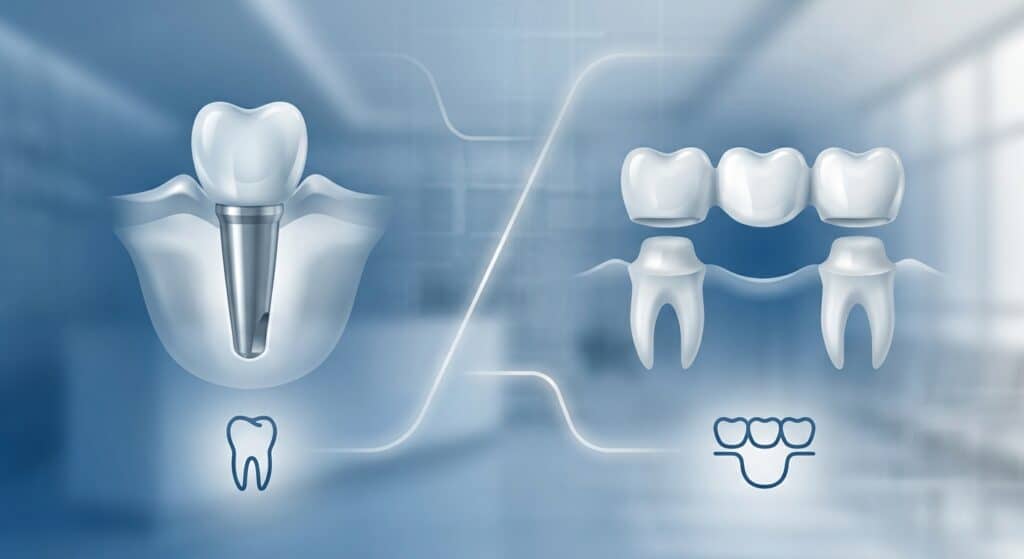
For those considering tooth replacement, dental implants Edmonton offer a distinct approach compared to traditional dental bridges. Both options aim to restore chewing function and aesthetic appearance, but they differ significantly in their structure, impact on surrounding teeth, and long-term outlook. Understanding these differences helps in making an informed decision about your oral health needs.
Dental implants provide a stable and permanent foundation by integrating directly with your jawbone, acting much like natural tooth roots. Conversely, bridges rely on support from adjacent teeth, which often requires altering healthy tooth structure. Regular dental care is important for both, but their maintenance routines and potential for future complications vary.
| Feature | Dental Implants | Dental Bridges |
|---|---|---|
| Support | Surgical placement into the jawbone. | Anchored to adjacent natural teeth. |
| Jawbone Preservation | Stimulates bone, preventing bone loss. | Does not stimulate bone, bone loss can occur over time. |
| Impact on Adjacent Teeth | No alteration to neighboring teeth. | Requires reshaping of adjacent teeth to support the bridge. | Longevity | Can last a lifetime with proper care. | Typically lasts 5-15 years, may need replacement. |
| Maintenance | Brushing and flossing similar to natural teeth. | Requires special cleaning tools to maintain hygiene under the bridge. |
| Appearance | Designed to blend naturally with existing teeth. | Can look natural but may show signs of wear over time. |
| Cost | Higher initial cost, potentially lower long-term cost. | Lower initial cost, potential for future replacement costs. |
| Procedure Length | Requires several months for healing and integration. | Faster placement, typically 2-3 appointments. |
| Suitability | Good for single or multiple missing teeth, provided sufficient bone density. | Good for one or more missing teeth, especially when adjacent teeth need crowns. |
What Are Dental Implants Edmonton?
Dental implants Edmonton are artificial tooth roots that dentists surgically place into your jawbone. These posts provide a stable foundation for replacement teeth, designed to look and function like natural teeth. The implant itself is typically made of titanium, a biocompatible material that fuses with the bone over several months. This fusion process, called osseointegration, anchors the implant firmly in place, allowing it to support a crown, bridge, or even dentures.
This treatment offers a lasting solution for missing teeth, restoring both aesthetics and chewing ability. Unlike other options, dental implants Edmonton maintain bone density, which helps preserve your facial structure. For patients missing one or more teeth, implants can significantly improve oral health and overall quality of life. Learn more about the dental implant process for more.
The benefits of choosing dental implants in Edmonton extend beyond appearance. They prevent adjacent teeth from shifting, which can cause bite problems and other dental issues. Implants also do not require alteration of neighboring healthy teeth, a common necessity for traditional bridges. Our team can explain the full benefits of implants during a consultation.
How Dental Bridges Work
Dental bridges replace one or more missing teeth by creating a literal bridge between existing teeth or dental implants. A bridge consists of artificial teeth, called pontics, which are held in place by dental crowns placed on the teeth on either side of the gap. These supporting teeth are called abutment teeth. The stability of a dental bridge relies on the health and strength of these abutment teeth.
Our team ensures these anchor teeth can support the additional stress of the bridge. Dental crowns are custom-made to fit over the abutment teeth, holding the pontic securely in the space where teeth are missing. This process restores chewing function and cosmetic appearance.
Types of Dental Bridges
Several kinds of dental bridges exist, each suited for different situations. Traditional bridges remain the most common choice, involving crowns on adjacent teeth with a pontic in between. This method requires altering the adjacent teeth to accommodate the crowns. Patients often ask our team about dental services for bridges.
- Traditional Bridges: Secured by crowns cemented onto natural teeth adjacent to the gap.
- Cantilever Bridges: Used when there are adjacent teeth on only one side of the missing tooth.
- Maryland Bonded Bridges: Use a framework bonded to the back of adjacent teeth, avoiding full crowns.
- Implant-Supported Bridges: Dental implants Edmonton can anchor a bridge when multiple teeth are missing.
Bridge Placement Process
Receiving a dental bridge typically involves multiple appointments. The initial visit prepares the abutment teeth by reshaping them to make room for the crowns. Impressions of the teeth are then taken and sent to a dental laboratory, where the custom bridge is crafted.
- Tooth Preparation: Abutment teeth are reshaped to fit the crowns.
- Impressions: Molds of your teeth are taken for the dental lab. A temporary bridge may be placed.
- Bridge Placement: The permanent bridge is checked for fit and bite, then cemented into place. Proper care and oral hygiene practices extend its life.
Pros and Cons: Implants vs. Bridges
Deciding between dental implants and bridges involves weighing their distinct advantages and disadvantages. Both options restore missing teeth, but they achieve this through different methods and offer varied long-term outcomes. Understanding these differences helps make an informed choice.
Dental implants offer a stand-alone solution, mimicking natural tooth structure. Bridges, on the other hand, rely on adjacent teeth for support. This table outlines a direct comparison of their features:
| Feature | Dental Implants | Dental Bridges |
|---|---|---|
| Bone Preservation | Stimulates jawbone, preventing bone loss bone grafting options | Does not prevent bone loss in the missing tooth area |
| Impact on Adjacent Teeth | No alteration to surrounding healthy teeth | Requires reduction of adjacent teeth for crown placement |
| Longevity | Can last a lifetime with proper care implant care | Typically lasts 5-15 years, requiring eventual replacement |
| Stability | Permanent fixture, feels like a natural tooth | May feel less stable over time as supporting teeth change |
| Maintenance | Brush and floss like natural teeth daily oral hygiene | Can be harder to clean under the bridge, potentially leading to decay |
| Cost | Higher initial cost, long-term value | Lower initial cost, potential for future replacements |
While bridges offer a quicker initial fix, dental implants provide a more permanent and conservative solution for oral health. Consider discussing these points with a dental professional to assess which option best suits your individual needs and oral condition.
Choosing the Right Option
Deciding between dental implants and bridges involves several considerations unique to each patient. Your oral health, financial plan, and long-term goals all factor into the decision. Consulting with a dental professional helps determine the best course of action for your smile.
When considering dental implants Edmonton, it is helpful to weigh key factors that influence the success and suitability of each option. Our team will guide you through this process to ensure you make an informed choice.
Key Considerations
- Bone Health. Sufficient jawbone density is important for dental implants to integrate properly. If bone loss has occurred, bone grafting may be necessary. Bridges do not require specific bone density, as they rely on adjacent teeth for support.
- Cost. The initial cost of dental implants can be higher than bridges, but they often offer a more durable, long-term solution. Bridges may require replacement over time, adding to cumulative expenses. Explore payment options to fit your budget.
- Longevity. With proper care, dental implants can last a lifetime. Bridges typically have a lifespan of 5 to 15 years before needing replacement.
- Aesthetics. Dental implants are designed to look and feel like natural teeth, preserving facial structure. Bridges also offer a natural appearance, but the supporting teeth may need reshaping.
- Maintenance Requirements. Maintaining dental implants is similar to caring for natural teeth. Bridges require diligent cleaning around and under the appliance to prevent plaque buildup and decay.
Next Steps for Restoration
Once you decide on a tooth restoration path, the next step involves connecting with a dental professional. Many patients interested in dental implants Edmonton begin with an initial consultation. This visit allows the dental team to assess your oral health, discuss your goals, and determine the most suitable treatment plan for your situation. A consultation offers a chance to ask questions and clarify any concerns about the procedure.
During your consultation, the dentist examines your teeth, gums, and jawbone structure. They may use X-rays or 3D imaging to get a detailed view of your oral anatomy. This information helps them recommend whether dental implants Edmonton or another option, like a dental bridge, best meets your needs. They also review your medical history to ensure you are a good candidate for the chosen restoration.
After developing a personalized treatment plan, the dental office helps you schedule your appointments. This includes arranging the placement of dental implants Edmonton, follow-up visits, and the final placement of your new teeth. Clear communication ensures you stay informed at every stage of the process, moving toward a restored smile. Our team can also discuss financing options to make treatment accessible.