
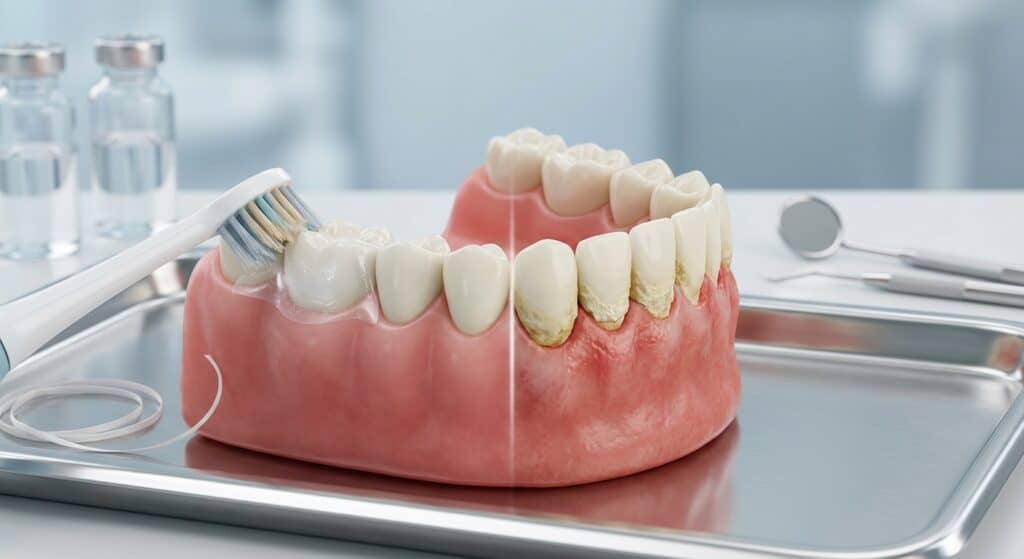
Dental prosthesis and cleaning tools on a dental model.

Plaque Vs Tartar Teeth: What You Need to Know

Plaque vs tartar teeth: understand the difference and protect your smile. Get effective dental care tips and discover how to prevent buildup. Learn more!

Understanding Plaque vs. Tartar Teeth

Many individuals wonder about the difference between plaque and tartar on their teeth. Plaque is a soft, sticky film that constantly forms on teeth, while tartar, also known as calculus, is hardened plaque that adheres firmly to the tooth surface. Understanding plaque vs. tartar teeth is crucial for maintaining good oral hygiene and preventing serious dental issues.

Both plaque and tartar are composed of bacteria, food debris, and saliva, but their states and the methods required for their removal are vastly different. While plaque can be managed with diligent daily brushing and flossing, tartar requires professional dental intervention for effective removal. If you are considering cosmetic improvements, understanding dental veneer costs and benefits can also be helpful.

The presence of plaque and its subsequent hardening into tartar can significantly impact your dental health, leading to conditions like cavities and gum disease. Recognizing the distinct characteristics and risks associated with plaque vs. tartar teeth empowers you to take the necessary steps for a healthier smile.

What is Dental Plaque?

Plaque is a colorless or pale yellow film that forms on your teeth. It is a sticky substance composed of bacteria, food particles, and saliva. If plaque is not removed regularly through brushing and flossing, it can harden into tartar, also known as calculus. Tartar is much more difficult to remove and can lead to more serious dental problems, so understanding how to manage plaque is key to preventing its progression to tartar, which often requires a professional dental cleaning for more.

Dental plaque is a sticky, colorless or pale yellow film that constantly forms on your teeth. It’s a complex biofilm composed primarily of bacteria, saliva, and food particles. If not removed regularly, plaque can lead to significant dental problems, including cavities and gum disease.

The formation of plaque is a natural process, but its persistence can be detrimental. Understanding its composition and how it adheres to tooth surfaces is the first step in managing oral hygiene effectively. Plaque vs tartar teeth discussions often begin with a clear definition of plaque as the precursor to tartar.

Key characteristics and common causes of plaque buildup include:

  • Sticky Film. Plaque is a soft, tenacious film that adheres strongly to tooth enamel, especially near the gum line and in hard-to-reach areas.
  • Bacterial Colony. It hosts a diverse community of bacteria, some of which feed on sugars from food and produce acids that erode tooth enamel.
  • Daily Formation. Plaque begins forming on teeth within minutes after brushing and continues to accumulate throughout the day.
  • Dietary Influence. Sugary and starchy foods and drinks significantly fuel the growth and acid production of plaque bacteria.
  • Poor Oral Hygiene. Inadequate brushing and flossing allow plaque to remain on teeth, increasing its density and potential for harm.

Understanding Dental Tartar (Calculus)

While plaque is a soft, constantly forming film on your teeth, tartar, also known as calculus, is what plaque becomes when it hardens. This calcification process typically occurs within 24 to 72 hours if plaque is not removed, and it’s important to understand the difference between cleaning and whitening to maintain optimal oral health.

The formation of tartar is a natural consequence of plaque hardening on the tooth surface. It often appears along the gumline and can be yellowish or brown in color, making it more noticeable than the often-clear plaque. Tartar provides a rough surface that attracts even more plaque, accelerating the cycle of bacterial buildup and potential oral health issues. Unlike plaque, which can be removed with diligent brushing, tartar requires professional intervention, such as a spring dental cleaning, to be effectively eliminated. Understanding the differences between plaque and tartar is crucial for maintaining good oral hygiene, and for more details on this topic, you can explore our general dentistry resources.

CharacteristicPlaqueTartar (Calculus)
TextureSoft, sticky filmHard, rough, mineralized deposit
ColorClear to yellowishYellowish-brown to brown
Formation TimeForms continuouslyForms when plaque hardens (within days)
Removal MethodRemovable with daily brushing and flossingRequires professional dental cleaning for removal
LocationCoats entire tooth surface, especially near gumsForms along the gumline, between teeth, and on tooth surfaces
Health ImpactCauses cavities, gum irritationContributes to gum disease, bad breath, and tooth decay

The Key Differences: Plaque vs. Tartar

While both plaque and tartar are unwelcome guests in your mouth, they are distinct in their composition, texture, and how they are managed. Understanding these differences is crucial for effective oral hygiene and preventing serious dental issues. Plaque is a daily buildup, whereas tartar is a hardened, long-term problem. For those who experience fear related to dental visits, exploring options for dental anxiety management can be very beneficial.

Formation and Composition: A Tale of Two Substances

Plaque is a soft, sticky, colorless film that constantly forms on your teeth. It’s a dynamic biofilm composed of bacteria, food particles, and saliva. This constant formation means plaque is present in everyone’s mouth and needs diligent removal.

Tartar, also known as calculus, is what plaque becomes when it’s not removed. Over time, plaque absorbs minerals from your saliva, causing it to harden and calcify. This transformation creates a hard, porous substance that firmly adheres to the tooth enamel and along the gumline, often requiring professional intervention such as a dental crown to fully restore your smile.

Texture and Appearance: Spotting the Signs

Plaque is typically difficult to see and feel. It might cause a slightly fuzzy sensation on your teeth, especially after eating. Its color is usually a pale yellow or can be transparent.

Tartar is much more noticeable. It often appears as yellowish or brownish deposits on the teeth, particularly near the gum line and between teeth. Unlike soft plaque, tartar has a rough, stony texture and can contribute to an uneven tooth surface, which is why understanding the difference between a dental cleaning vs whitening is important.

Removal Methods: Home Care vs. Professional Intervention

While daily brushing and flossing are crucial for removing plaque at home, tartar buildup often requires professional intervention. Regular dental check-ups and cleanings are essential for removing hardened calculus and preventing associated dental issues. If you experience significant tartar buildup or are concerned about its impact on your oral health, consider discussing professional cleaning options with your dentist; they can also advise on treatments for damaged teeth, such as learning about dental crown benefits for more.

The good news is that plaque can be effectively removed at home through regular brushing and flossing. These daily habits physically disrupt the bacterial film, preventing it from accumulating and hardening.

Tartar, however, is far more stubborn. Once plaque calcifies into tartar, it cannot be removed by brushing or flossing alone. Professional dental tools are required to scrape and remove hardened tartar from the teeth, a process that is part of a standard dental cleaning. This highlights the importance of regular dental check-ups and cleanings.

Professional Tartar Removal Steps

When plaque and tartar are left unchecked on your teeth, they can lead to a cascade of negative health consequences. Plaque’s bacteria produce acids that erode tooth enamel, initiating the process of tooth decay. Tartar, being a rougher surface, encourages even more plaque to adhere, creating a vicious cycle that significantly worsens oral health problems, and may even necessitate dental crown placement.

From a dental professional’s perspective, the most common and concerning outcomes we see from poor plaque and tartar management are advanced gum disease and significant tooth decay. We frequently treat patients whose dental health has deteriorated due to these persistent issues, often requiring extensive restorative work, such as dental crowns, to repair damage. Understanding the risks associated with plaque vs tartar teeth is the first step toward prevention.

The accumulation of plaque and tartar can lead to several detrimental conditions:

  • Cavities: The acids produced by bacteria in plaque break down tooth enamel, forming holes that become cavities.
  • Gingivitis: This is the initial stage of gum disease, characterized by inflamed, red, and sometimes bleeding gums. It’s directly caused by plaque buildup along the gumline.
  • Periodontitis: If gingivitis is left untreated, it can progress to periodontitis, a severe gum infection that damages the soft tissue and bone supporting the teeth. This can ultimately lead to tooth loss.
  • Tooth Loss: Advanced gum disease and extensive decay can weaken the supporting structures of the teeth, leading to them becoming loose and eventually falling out.
  • Bad Breath (Halitosis): The bacteria present in plaque and tartar produce foul-smelling compounds, contributing to persistent bad breath. For effective solutions, explore ways to beat bad breath and achieve lasting freshness.
  • Tooth Discoloration: Tartar often has a yellowish or brownish hue and can make teeth appear stained and less appealing.

It is crucial to recognize that these conditions are not merely cosmetic concerns. Untreated dental issues can impact your overall well-being. For instance, chronic inflammation from periodontitis has been linked to systemic health problems such as heart disease and diabetes. Therefore, diligent oral hygiene practices are essential for maintaining not just a healthy smile, but a healthy body.

Preventing Plaque and Tartar Accumulation

Preventing plaque and tartar buildup is essential for maintaining excellent oral hygiene and avoiding dental problems. The good news is that with consistent daily practices, you can significantly reduce the formation of both. By incorporating effective routines into your daily life, you empower yourself to keep your teeth and gums healthy.

Regularly addressing plaque is the most effective way to prevent tartar from forming. Since tartar is hardened plaque, focusing on removing plaque before it calcifies is key. This involves diligent brushing and flossing, as well as understanding the role of diet and professional dental care in this ongoing battle against plaque vs tartar teeth. For more on maintaining a healthy smile, consider exploring oral hygiene practices for more.

  • Thorough Brushing. Brush your teeth at least twice a day for two minutes each time, ensuring you reach all surfaces of your teeth, including the gumline. Use a fluoride toothpaste to strengthen enamel and fight decay.
  • Consistent Flossing. Floss daily to remove plaque and food particles from between your teeth and under the gumline, areas that your toothbrush cannot easily reach. This step is crucial for preventing plaque buildup in difficult-to-access spots.
  • Antiseptic Mouthwash. Consider using an antimicrobial or antiseptic mouthwash as a supplement to brushing and flossing. This can help reduce the bacteria in your mouth that contribute to plaque formation.
  • Healthy Diet Choices. Limit your intake of sugary and starchy foods and drinks, as these provide fuel for the bacteria that create plaque. Opt for a balanced diet rich in fruits, vegetables, and lean proteins, as detailed in our guide to foods for teeth for more.
  • Stay Hydrated. Drinking plenty of water helps to wash away food particles and bacteria. It also aids in saliva production, which naturally cleanses the mouth.
  • Avoid Tobacco Products. Smoking and other tobacco use significantly increase the risk of plaque and tartar buildup, as well as gum disease and other oral health issues.

Implementing these habits can make a substantial difference in preventing plaque and tartar accumulation. Consistent effort is the cornerstone of effective oral care and a healthy smile for years to come.

When to See Your Dentist: Professional Care

While diligent daily oral hygiene is the cornerstone of preventing plaque and tartar buildup, professional dental care plays an indispensable role. Regular dental check-ups and cleanings are essential for removing hardened tartar that at-home methods cannot address. These appointments also allow your dentist to identify and treat early signs of dental issues before they become more severe.

Understanding when to seek professional dental attention is key to maintaining optimal oral health. Plaque vs tartar teeth require different approaches, and professional intervention is crucial for the latter. If you notice significant buildup, particularly along the gumline, or experience persistent bad breath, it’s time to schedule an appointment with your dentist.

Here are several indicators that signal it’s time to see your dentist:

  • Visible, hardened deposits (tartar) on your teeth, especially near the gum line.
  • Persistent bad breath that doesn’t improve with brushing and flossing.
  • Bleeding or swollen gums, which can be signs of gingivitis or periodontitis.
  • Tooth sensitivity or pain, which might indicate cavities forming under plaque or tartar.
  • Any changes in the appearance or feel of your teeth and gums.

Your dental professional has the tools and expertise to effectively remove tartar and address any related oral health concerns. They can also provide personalized advice on improving your home care routine to minimize the risk of plaque and tartar accumulation. Don’t wait for pain or discomfort to seek help; proactive dental care is the best way to maintain a healthy smile and prevent serious dental problems.

For comprehensive care and to ensure your teeth are free from plaque and tartar, visiting a dental professional regularly is non-negotiable. They can provide a thorough cleaning and examination, addressing any issues before they escalate. This professional intervention is a critical component in the ongoing battle against plaque vs tartar teeth. If you’re experiencing tooth sensitivity, understanding the potential causes can help you seek appropriate treatment, such as exploring why your teeth hurt for more.

Key Takeaways on Plaque vs. Tartar

Understanding the fundamental differences between plaque and tartar is crucial for maintaining optimal oral hygiene. Plaque is a soft, sticky bacterial film that forms daily, while tartar, also known as calculus, is hardened plaque that adheres firmly to teeth. This distinction is vital for effective prevention and treatment strategies.

The ongoing battle against plaque and tartar accumulation requires a consistent approach to oral care. Regular brushing and flossing are your primary defenses against plaque, preventing it from hardening into tartar. Recognizing the signs and understanding the progression from plaque to tartar empowers individuals to take proactive steps for their dental health. This proactive approach can also help prevent issues like stale mouth, which is often linked to poor oral hygiene.

Professional dental care plays an indispensable role in managing plaque and tartar. While daily home care is effective against plaque, only dental professionals possess the tools and expertise to safely remove hardened tartar. Regular dental check-ups and cleanings are essential for preventing the serious dental issues that can arise from unchecked buildup, and understanding the difference between cleaning and whitening can help you prioritize your treatments.

Sign Up for an Appointment

It just takes a few minutes to book a visit online.

"*" indicates required fields

Name*
MM slash DD slash YYYY
Dental Blog

More Dental Blog Posts

Keep reading some of our latest articles about all things dental.